
Machines don’t go down for lack of parts. They go down because nobody knew service was due.
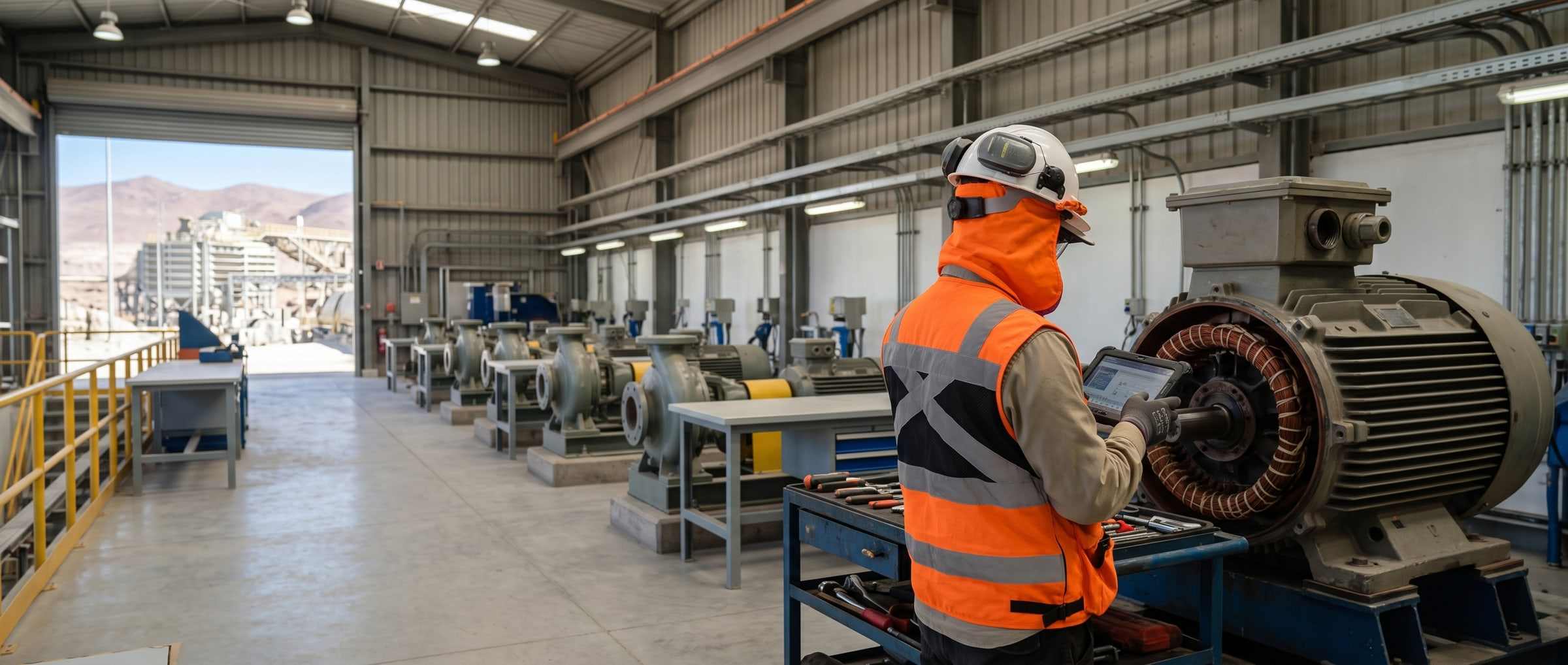
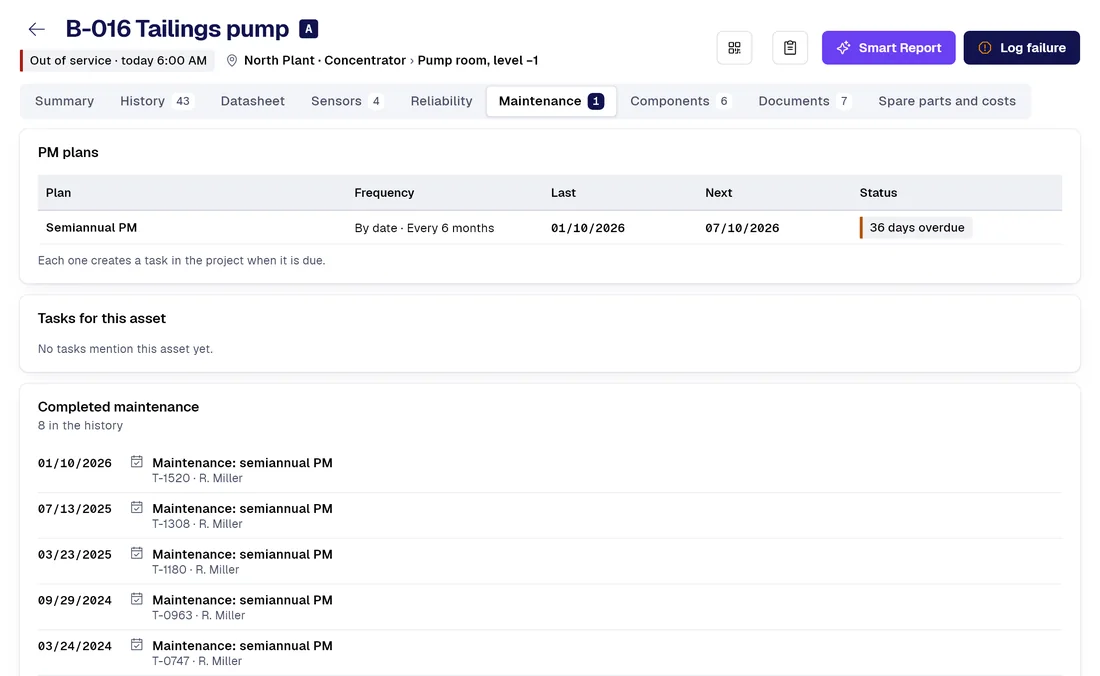
Every unit has its schedule and its due date. The schedule is never the problem: the date lives in a spreadsheet that gets opened too late, and the work done on the machine is scattered across a binder, a chat and the memory of whoever was there that day. PAIR puts both on the unit’s record.
Today / With PAIR
Five things that change in the first month
| Today |  |
|---|---|
| The maintenance manager keeps the schedule and the next date in a spreadsheet that gets opened late. | The next due date leaves the spreadsheetEvery unit with its interval and due date, and the site list sorted by what’s due first. A unit nobody assigned a plan to shows gray, not green: it isn’t current, it’s unmonitored. |
| Nobody creates it: maintenance depends on someone remembering the date in time. | Due maintenance becomes a task with an ownerThe task with its owner and due date, and a notice to the owner, queued the moment the task is created and delivered in a grouped email digest at the frequency that person chose. If a task for that maintenance already exists, no duplicate is created. |
| What was done to the unit is scattered across a binder, a chat and someone’s memory. | Everything ever done to the unit, on one pageThe history per unit, newest first, showing who filled out each entry. Deleted entries don’t count as history, and restoring one puts it back automatically. |
| The supervisor announces that the unit is out of service, and the operator may never hear it. | A unit that can’t be operated, flagged where people lookThe flag with its date, a written reason (with a minimum: “broken” won’t do) and the name of whoever set it. While it stands, no work can be assigned to the unit, and not even the pre-use inspection clears it: someone has to remove it by hand, and that leaves a trace. |
| Whoever hands over the machine and whoever receives it rely on a stray photo on a phone. | The machine going out and coming back, field by fieldThe two photos of the same field side by side and a list of what changed. If someone hands over a machine that was already handed over, the record shows who forced it and which handover it overrode. |
Smart captureProfessional
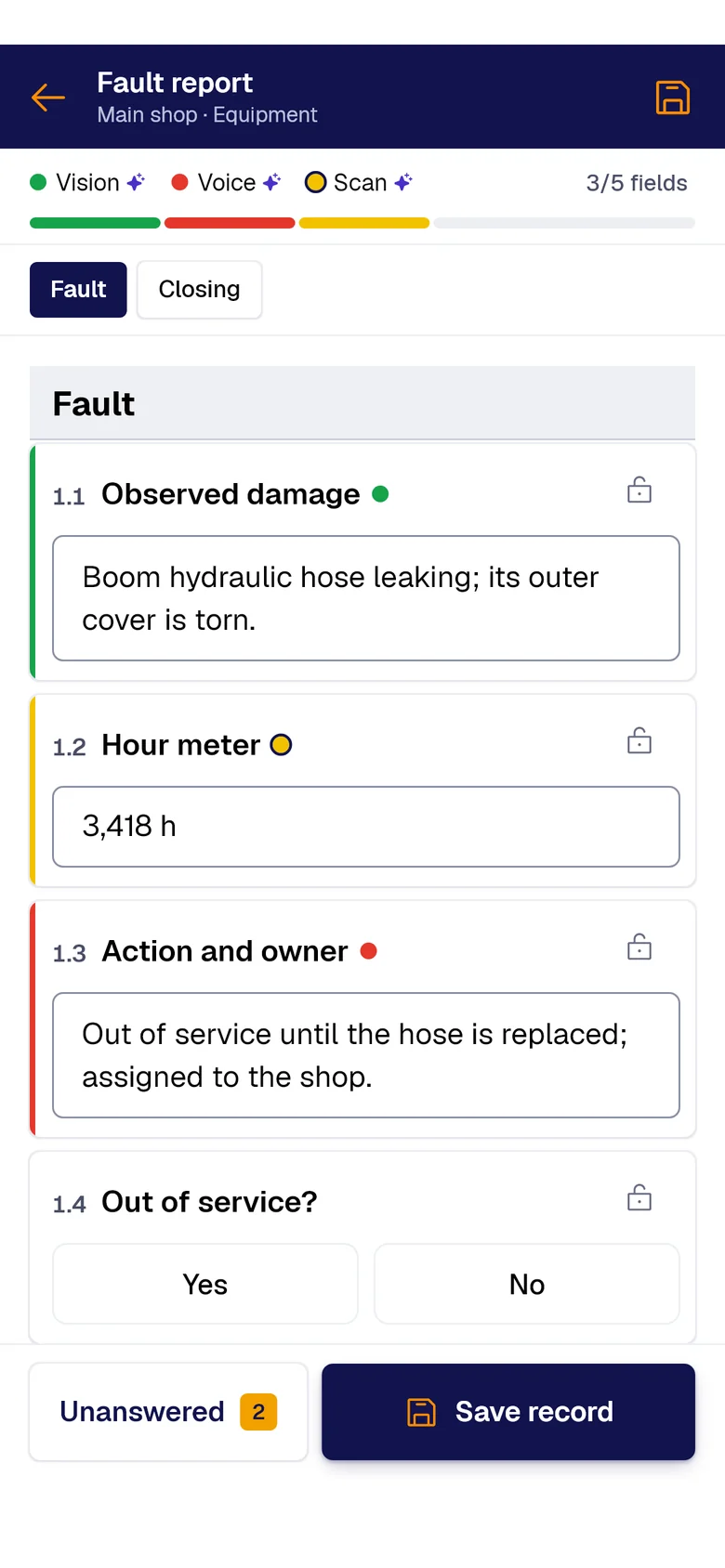
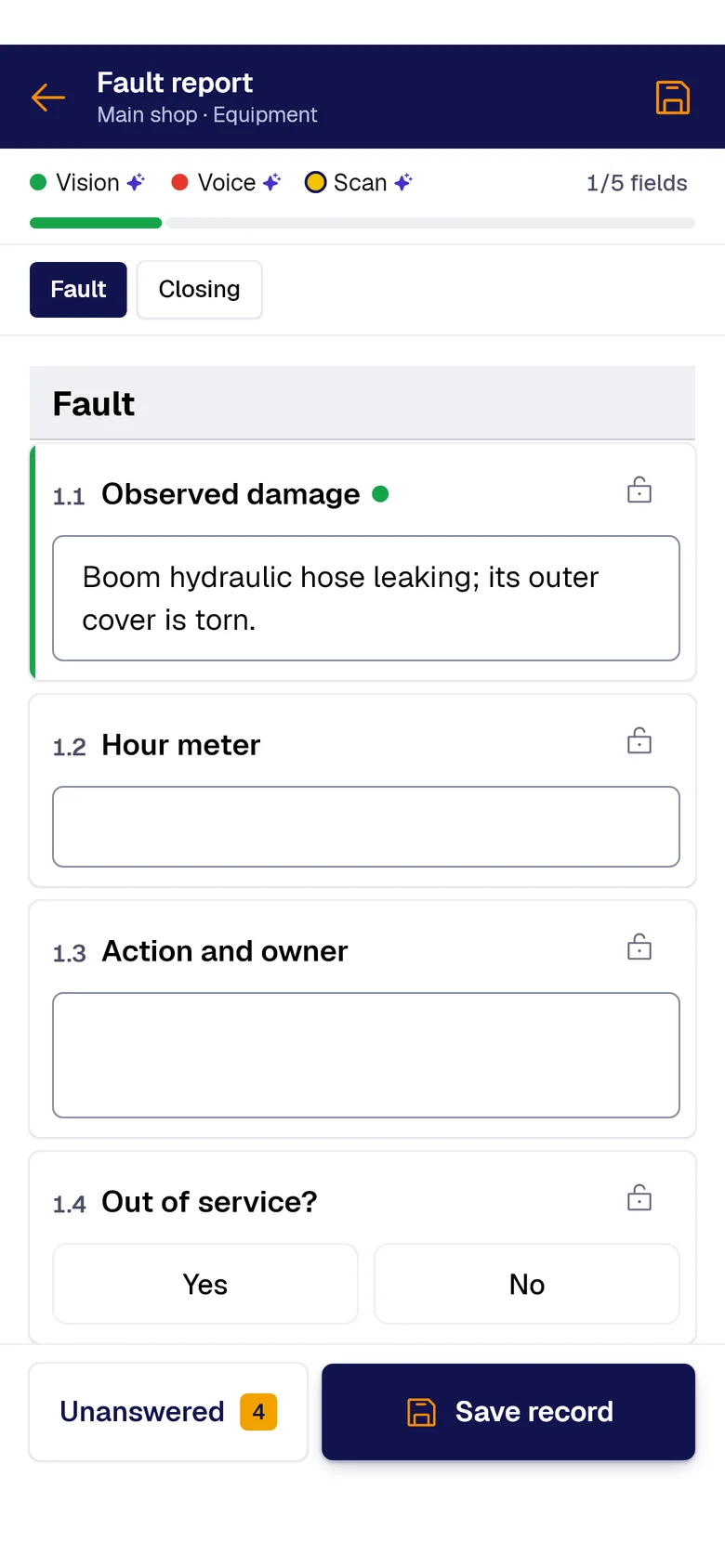
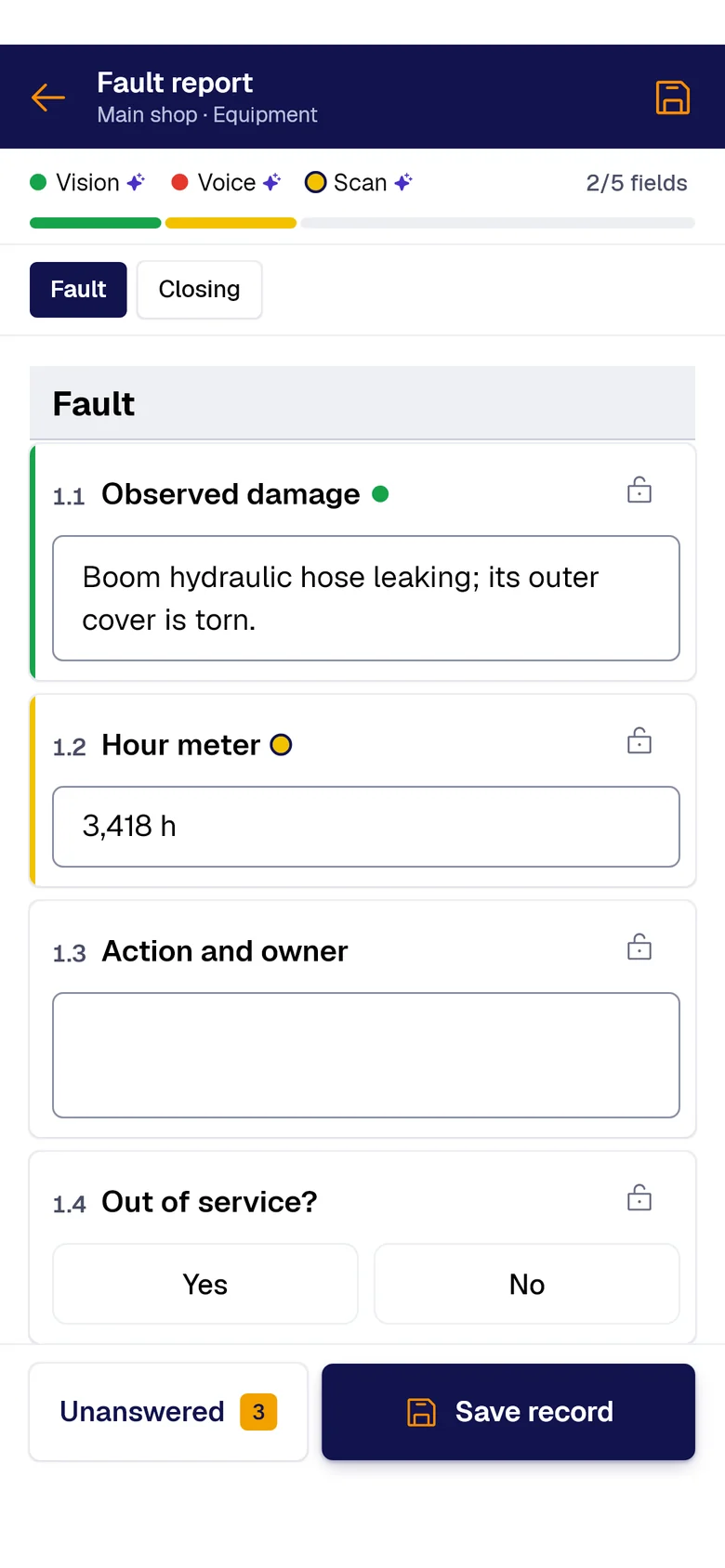
Your forms fill themselves with AI.
A photo, the paper sheet or your voice: AI fills each field and marks where it came from. You just review and save.
- PAIR VisionAI Take a photo and AI fills the fields with what it sees.
- PAIR ScanAI Scan the paper sheet and AI moves its data into the form.
- PAIR VoiceAI Speak and AI transcribes and fills the fields.
What keeps scheduled maintenance from happening
For equipment that gets maintained, handed over and operated: the unit with a name and a number. If you’re after area walk-throughs or the weekly checklist, those are inspections.
The schedule exists and so does the date, but they live in a spreadsheet that gets opened when someone remembers. A unit can go twenty-nine days without maintenance and never show up on a screen.
When a machine breaks down, the first question is what was done to it and when. The answer is in three places, and none of them is the unit.
The machine goes out on loan with a photo and comes back with a dent. Without both ends on the same form, you can’t win the argument over who did it.
What you start with
-
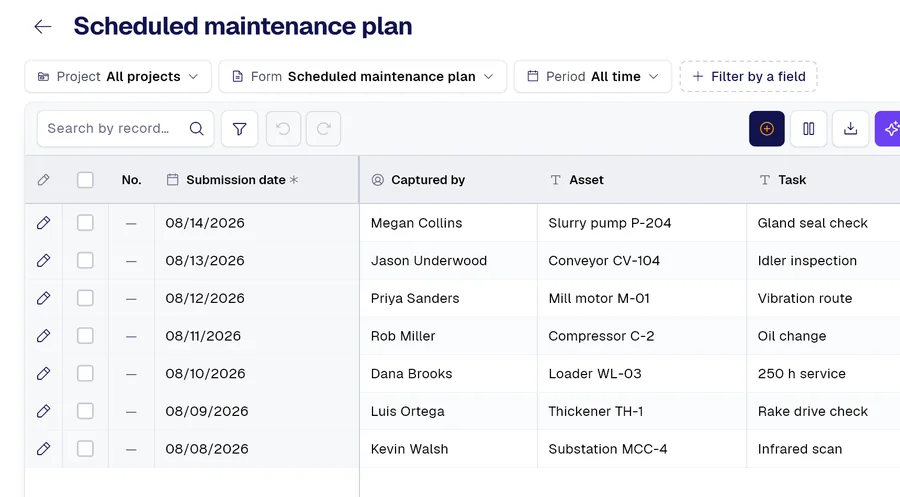 Form 01
Scheduled maintenance plan, with its interval in days and its owner
-
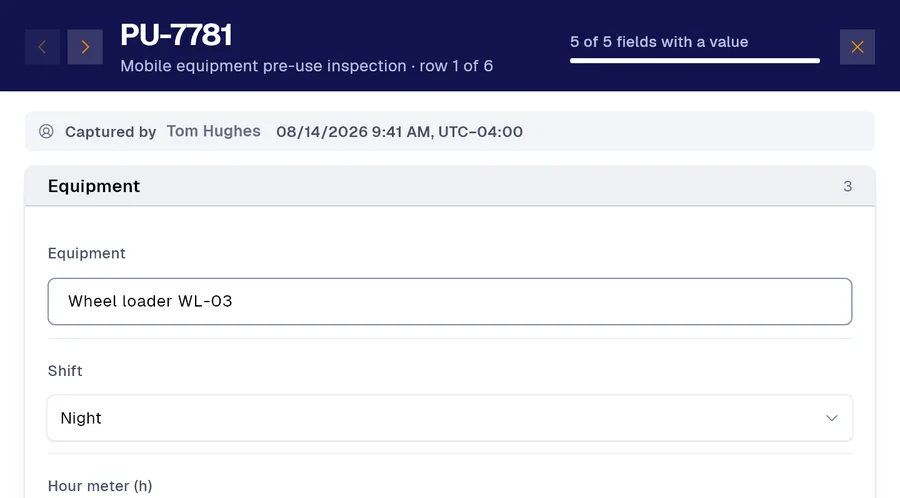 Form 02
Mobile equipment pre-use inspection, per shift or per day
-
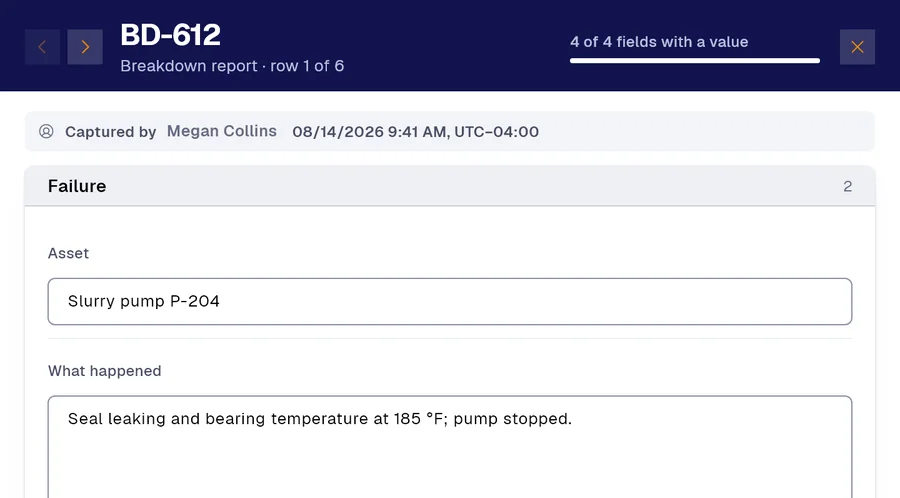 Form 03
Breakdown report, with owner and deadline
And many more, built around your operation. Ask us.
Demo
Bring us the schedule for one of your units
The maintenance schedule and pre-use inspection you use today, Excel included: in thirty minutes you’ll see them on a unit’s record, with its next due date and its owner.
Would you rather look at the plans first? See pricing.